
Therefore, to better understand the state of the company’s cash, the formula of change in net working capital is used. Long-term receivables or a near-exhausted credit line do not count towards your current assets. Neither does an intangible asset, such as office property, or the valuation of factories or warehouse materials. Assets are pure sources of cash flow that can be liquidated within a twelve-month period.
- These include short lifespan and swift transformation into other forms of assets.
- If either sales or COGS is unavailable, the “days” metrics cannot be calculated.
- This cash flow can directly benefit or harm the working capital of your company.
- The current assets and current liabilities are each recorded on the balance sheet of a company, as illustrated by the 10-Q filing of Alphabet, Inc (Q1-24).
- If you’re seeking financing for your business, SoFi is here to support you.
- The change in net working capital refers to the difference between the net working capital of a company in two consecutive periods.
Debt Restructuring vs. Refinancing: What’s Right for Your Business?

Therefore, financial managers must develop effective working capital policies to achieve growth, profitability, and long-term success. The calculator will then determine your working capital needs for the next year. The following is a sample calculation for a business with a busy season from May to August. To minimize the impact of any recent changes, I recommend not basing the working capital estimate on shorter periods as they may inadvertently favor one party or the other. The remainder of working capital consists of accrued expenses and liabilities.
Example Calculation #2: NWC at Close vs. the Target
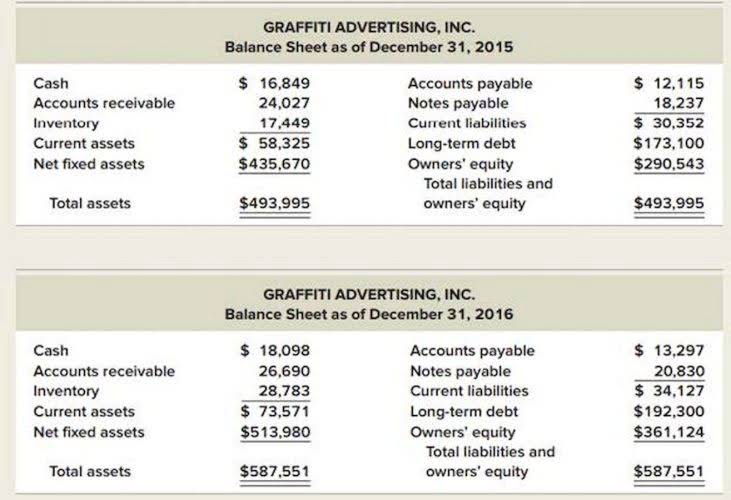
To calculate change in working capital, you first subtract the company’s current liabilities from the company’s current assets to Airbnb Accounting and Bookkeeping get current working capital. You then take last year’s working capital number and subtract it from this year’s working capital to get change in working capital. As a business owner, it’s important to calculate working capital and changes in working capital from one accounting period to another to clearly assess your company’s operational efficiency. Lenders will often look at changes in working capital when assessing a company’s management style and operational efficiency. Change in working capital is the change in the net working capital of the company from one accounting period to the next. This will happen when either current assets or current liabilities increase or decrease in value.
Discover how we’ve helped businesses just like yours
This financial metric provides valuable insights into a company’s operational efficiency and short-term financial health. In this guide, we’ll explore how to calculate changes in Net Working Capital, interpret the results, and use this information to make better business decisions. A business has positive working capital when it currently has more current assets than current liabilities. This is a sign of financial health, since it means the company will be able to fully cover its short-term obligations as they come due over the next year.

The average period could be shorter – three or six months – if it better reflects the operations of the business or the near-future outlook. Rapid growth requires an additional infusion of working capital, so a calculation based on a historical timeframe would not be sufficient to support revenue in the months immediately following the closing. Best practice is to use a longer timeframe to smooth out any abnormalities, such as the impact of seasonality, rapid growth, or a decline in the business, all of which can affect the calculation. There are multiple methods investors can use to calculate free cash flow to the firm (FCFF). Since FCFF represents cash flows to all claimants in a firm, not just equity holders like free cash flow to equity (FCFE), it’s also known changes in nwc formula as unlevered free cash flow (UFCF).
Ways to Increase Cash Flow from Assets
A reserve for bad debt is subjective to some degree, and many purchase agreements define how the reserve will be set for calculating working capital. Other businesses don’t carry a reserve and only write off bad debts as they occur. For them, it’s more appropriate to determine a suitable reserve and include it when calculating working capital. Working capital fluctuates for most businesses throughout the year and is also subject to manipulation. For example, inventory can be rapidly sold off and reserves not replenished, accounts receivables aggressively collected by offering discounts, and prepaid expenses reduced. All such actions can reduce working capital in the short term, but they may not be sustainable over longer periods.

Ultimately, changes in net working capital impact a company’s cash flow and financial health, highlighting the importance of monitoring these fluctuations for effective financial management. It’s not to see whether there are more current assets than current liabilities. If you are a business owner, it makes no sense to constantly check whether you have more assets than liabilities on the balance sheet. A business has negative working capital when it currently has more liabilities than assets.

Using Change in Working Capital to Calculate Warren Buffett’s Version of Free Cash Flow: Owner Earnings
Once the remaining years are populated with the stated numbers, we can calculate the change in NWC across the entire forecast. Since we have defined net working capital, we can now explain the importance of understanding the changes in net working capital (NWC). Continuously reviewing and cutting unnecessary expenses can help you maintain a better CFFA. This doesn’t have to mean reducing ledger account the quality of your products; it could involve finding more cost-effective suppliers or automating manual processes. Thus, if the net working capital at the end of February was 150,000 US dollars, and at the end of March – 200,000 US dollars, the change in working capital was an increase of 50,000 US dollars. You do not always need to use a net cash change calculator to find these changes from one reporting year to another.

The Working Capital Cycle
It provides insights into a company’s ability to cover its short-term obligations and invest in its daily operations. Positive working capital generally means a company has enough resources to pay its short-term debts and invest in growth and expansion. Conversely, negative working capital indicates potential cash flow problems, which might require creative financial solutions to meet obligations. In March 2024, Microsoft (MSFT) reported $147 billion of total current assets, which included cash, cash equivalents, short-term investments, accounts receivable, inventory, and other current assets. Another financial metric, the current ratio, measures the ratio of current assets to current liabilities. Unlike working capital, it uses different accounts in its calculation and reports the relationship as a percentage rather than a dollar amount.
This applies to attempts to evaluate a security on the basis of its historical price movements and volume trends. This is in contrast to fundamental analysis, which focuses on valuing securities based on basic business results, such as profits. When the asset has acquired value, the positive net change is expressed by a plus sign, +0.50, which may mean 50 cents or any other currency. If the value of the asset is lost, the negative net change is expressed as a negative sign -0.50. The difference between prices for different periods of time is reflected as a net change, but it can also be called simply a “change”. Net change represents the most common data presented for financial quotations.